Deciding between dental implants and dentures can be a significant choice for individuals seeking to restore their smile and oral function. Both options offer effective solutions for missing teeth, but they differ considerably in terms of their design, benefits, drawbacks, and overall patient experience. For international patients considering dental tourism, understanding these distinctions and practical considerations is crucial for making an informed decision.
Understanding Dentures
Dentures are removable prosthetic devices designed to replace missing teeth and surrounding tissues. They are custom-made to fit comfortably in the mouth and can be full or partial.
Types of Dentures
- Complete Dentures: Used when all teeth in an arch (upper or lower) are missing. They rest on the gums and are held in place by suction and sometimes adhesives.
- Partial Dentures: Used when some natural teeth remain. They typically consist of replacement teeth attached to a gum-colored base, often with metal clasps that attach to existing natural teeth for stability.
Pros of Dentures
- Affordability: Generally the most economical option for replacing multiple missing teeth upfront.
- Non-Invasive: The process of getting dentures does not involve surgery.
- Quick Solution: Dentures can often be fabricated and fitted within a relatively short timeframe compared to implants.
- Easy to Clean: Removable nature allows for straightforward cleaning outside the mouth.
Cons of Dentures
- Stability Issues: Can slip, click, or feel less secure, especially complete dentures, which may affect speech and eating.
- Bone Loss: Do not stimulate the jawbone, leading to gradual bone resorption over time, which can alter facial structure and necessitate denture relining or replacement.
- Comfort: May cause gum irritation, sores, or discomfort, especially during the initial adjustment period.
- Dietary Restrictions: Certain hard or sticky foods may be difficult or impossible to eat.
- Maintenance: Require daily removal for cleaning and soaking, and may need adhesives for better retention.
- Lifespan: Typically need relining every few years and replacement every 5-10 years.
Understanding Dental Implants
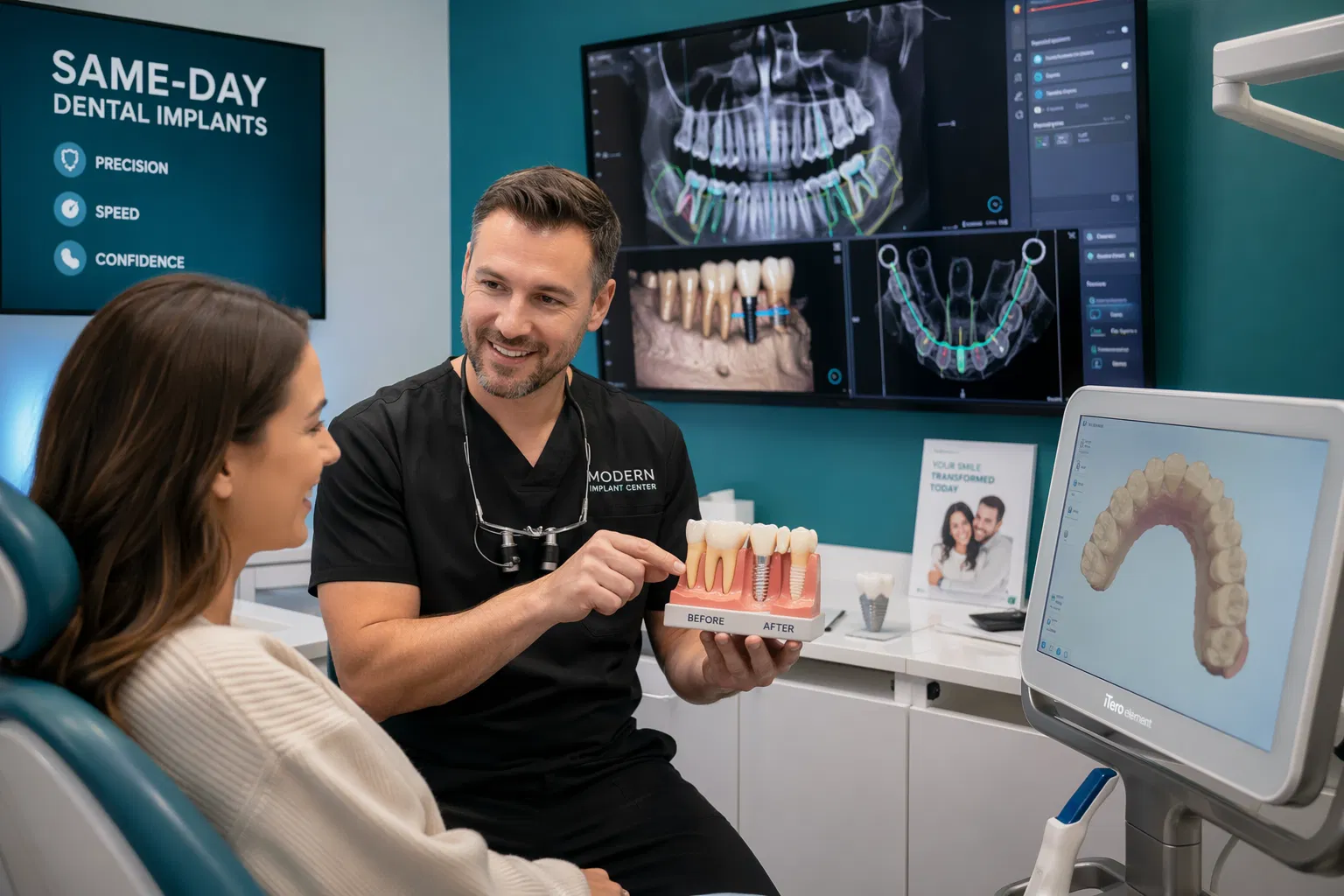
Dental implants are a more permanent and advanced solution for missing teeth. They consist of a small, screw-shaped post, usually made of titanium, that is surgically placed into the jawbone to act as an artificial tooth root.
Types of Dental Implants
- Single Tooth Implant: Replaces one missing tooth with an implant crown.
- Implant-Supported Bridge: Replaces several missing teeth by supporting a bridge on two or more implants, avoiding the need to alter adjacent natural teeth.
- All-on-4/All-on-6: A technique where a full arch of prosthetic teeth is supported by four or six strategically placed implants.
- Implant-Retained Dentures: Dentures that snap onto implants for enhanced stability and retention, offering a hybrid solution.
Pros of Dental Implants
- Superior Stability and Comfort: Function and feel like natural teeth, providing excellent stability for eating and speaking.
- Preserves Jawbone: Stimulate the jawbone, preventing bone loss and maintaining facial structure.
- Durability and Longevity: With proper care, implants can last a lifetime.
- Improved Oral Health: Do not require altering adjacent healthy teeth, unlike traditional bridges.
- Enhanced Aesthetics: Provide a natural-looking and feeling smile.
- No Dietary Restrictions: Allow for consumption of all types of food.
Cons of Dental Implants
- Surgical Procedure: Requires one or more surgical procedures, which carry inherent risks (though generally minor).
- Treatment Time: The entire process, from implant placement to crown attachment, can take several months, as it involves a healing period for osseointegration (bone fusing with the implant).
- Candidacy Requirements: Requires sufficient jawbone density and good overall health.
- Potential Complications: While rare, complications like infection, nerve damage, or implant failure can occur.
Candidacy for Dental Implants vs. Dentures
Dentures Candidacy
Most individuals missing multiple teeth are candidates for dentures. Key considerations include:
- Oral Health: Healthy gums and remaining teeth (for partial dentures).
- Jawbone Structure: Sufficient bone to support the denture (though less critical than for implants).
- Patient Preference: Willingness to manage removable prosthetics.
Dental Implants Candidacy
Ideal candidates for dental implants generally possess:
- Good Overall Health: Free from uncontrolled chronic diseases (e.g., diabetes, heart disease) that could impair healing.
- Sufficient Jawbone Density: Adequate bone volume and quality to support the implant. Bone grafting may be an option for those with insufficient bone.
- Healthy Gums: No active periodontal disease.
- Non-Smoker: Smoking significantly increases the risk of implant failure.
- Commitment to Oral Hygiene: Willingness to maintain excellent oral hygiene.
A thorough dental examination, including X-rays and possibly 3D scans, is essential to determine suitability for implants.
Longevity
- Dentures: Typically last 5-10 years, requiring relining or adjustments every few years due to changes in jawbone structure.
- Dental Implants: With proper oral hygiene and regular dental check-ups, the implant post itself can last a lifetime. The crown or bridge attached to the implant may need replacement after 10-15 years due to wear and tear.
Recovery
- Dentures: The recovery period primarily involves adjusting to wearing the dentures. This can take several weeks, during which patients may experience mild soreness, difficulty speaking, and altered eating sensations.
- Dental Implants: Recovery involves healing after the surgical placement of the implant.
- Initial Healing: Swelling, bruising, and mild discomfort are common for a few days post-surgery. Pain medication is usually prescribed.
- Osseointegration: The most crucial part of recovery, where the implant fuses with the jawbone. This process typically takes 3-6 months. During this time, a temporary prosthetic may be worn.
- Final Restoration: Once osseointegration is complete, the permanent crown or bridge is attached.
Maintenance
- Dentures:
- Daily Cleaning: Must be removed daily for thorough cleaning with a denture brush and specialized cleaner to prevent plaque and stain buildup.
- Soaking: Should be soaked overnight in a denture solution to keep them moist and prevent warping.
- Regular Check-ups: Annual dental visits are recommended for denture assessment, relining, or adjustments.
- Dental Implants:
- Oral Hygiene: Require the same diligent oral hygiene as natural teeth: brushing twice daily, flossing, and using mouthwash. Specialized brushes or floss may be recommended for cleaning around implants.
- Regular Dental Check-ups: Essential for monitoring implant health, professional cleaning, and early detection of any potential issues. These check-ups are typically recommended every six months.
Choosing between dental implants and dentures involves weighing various factors, including invasiveness, longevity, and desired quality of life.