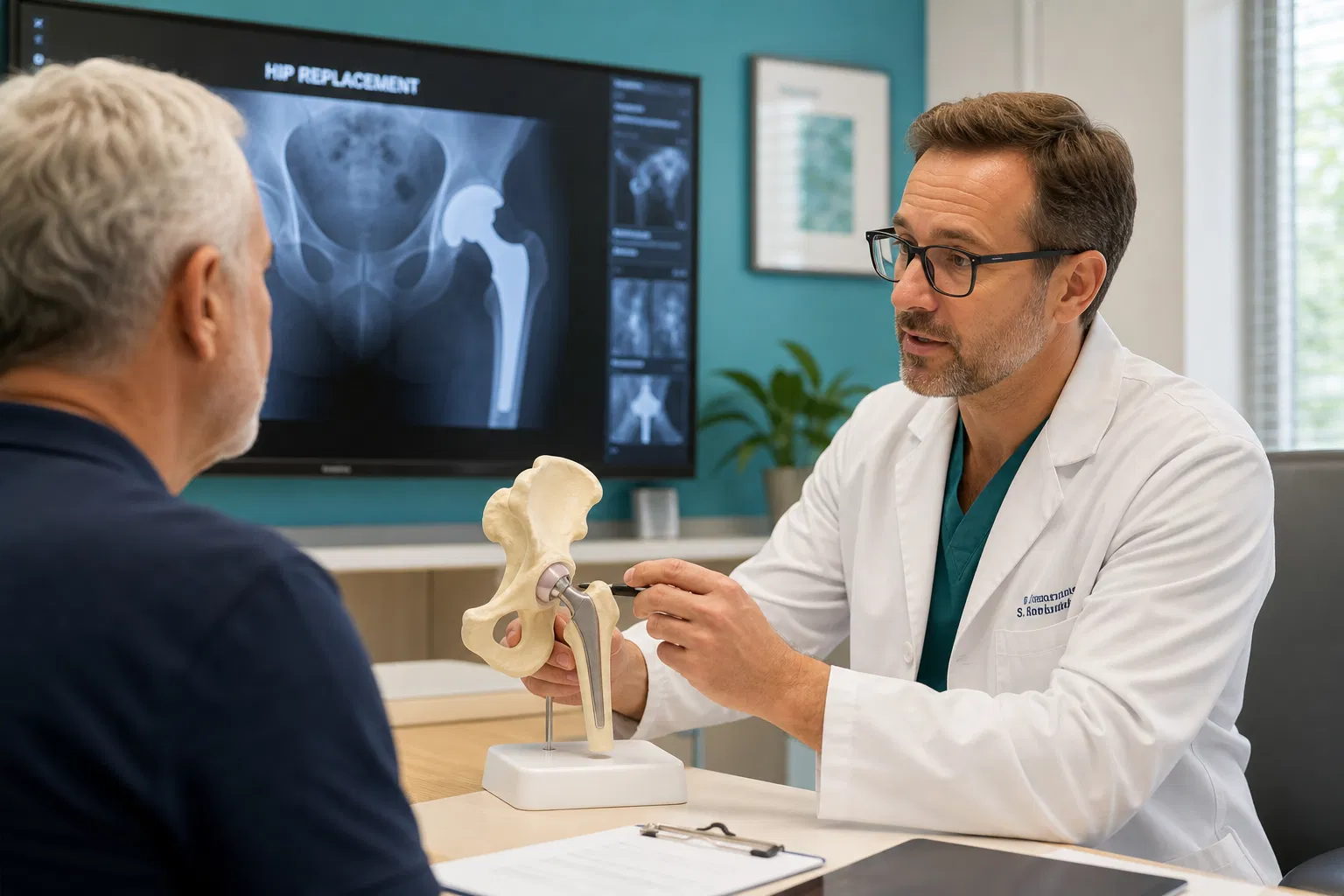
Total knee replacement, also known as total knee arthroplasty, is a common and highly effective surgical procedure designed to alleviate severe knee pain and improve mobility for individuals whose knee joints have been significantly damaged. As a leading healthcare provider in China, Distinct Healthcare offers state-of-the-art facilities and experienced orthopedic specialists to international patients seeking this life-changing surgery.
Who Needs Total Knee Replacement Surgery?
Total knee replacement is typically recommended for individuals experiencing chronic knee pain and disability that significantly impacts their quality of life and has not responded to conservative treatments. The most common reasons for needing a total knee replacement include:
- Osteoarthritis: This degenerative joint disease is the most frequent cause of knee pain requiring surgery. It occurs when the cartilage that cushions the ends of the bones in the knee joint wears away, leading to bone-on-bone friction, pain, stiffness, and reduced mobility.
- Rheumatoid Arthritis: An autoimmune disease that causes chronic inflammation of the joints, including the knees. Over time, this inflammation can damage cartilage and bone, leading to pain and deformity.
- Post-traumatic Arthritis: This type of arthritis can develop after a severe knee injury, such as a fracture or ligament tear. The injury can damage the cartilage, leading to premature wear and tear of the joint.
- Other conditions: Less common conditions like avascular necrosis, bone tumors, or severe knee deformities can also necessitate a total knee replacement.
Generally, candidates for total knee replacement surgery share several characteristics:
- Severe knee pain: Persistent pain that interferes with daily activities, sleep, and overall well-being.
- Significant stiffness and limited range of motion: Difficulty bending or straightening the knee, making activities like walking, climbing stairs, or getting in and out of chairs challenging.
- Failure of conservative treatments: Non-surgical options such as medication, physical therapy, injections (corticosteroids, hyaluronic acid), and lifestyle modifications have not provided adequate relief.
- X-ray evidence of significant joint damage: Imaging studies clearly show severe cartilage loss, bone spurs, and other signs of advanced arthritis.
- Overall good health: While age is not a strict barrier, candidates should be healthy enough to undergo surgery and participate in rehabilitation.
Your orthopedic surgeon will conduct a thorough evaluation, including a physical examination, review of your medical history, and imaging tests, to determine if total knee replacement is the most appropriate treatment option for you.
The Total Knee Replacement Procedure
Total knee replacement surgery is a sophisticated procedure performed by highly skilled orthopedic surgeons. While the specific steps may vary slightly depending on the individual patient and surgeon's technique, the general process involves:
- Anesthesia: You will receive either general anesthesia (you are completely asleep) or regional anesthesia (an epidural or spinal block that numbs your lower body) combined with sedation. Your anesthesiologist will discuss the best option for you.
- Incision: The surgeon makes an incision, typically 6-10 inches long, over the front of the knee to expose the knee joint.
- Preparation of the Bone: The damaged cartilage and a small amount of underlying bone are carefully removed from the ends of the thigh bone (femur) and shin bone (tibia). The kneecap (patella) may also be resurfaced if its underside is damaged.
- Implant Placement: Metal components are then precisely fitted onto the prepared bone surfaces. These components are typically made of cobalt-chromium or titanium alloys. A medical-grade plastic (polyethylene) spacer is inserted between the metal components to create a smooth gliding surface, mimicking healthy cartilage.
- Kneecap Resurfacing (if needed): If the back of your kneecap is damaged, a plastic button may be cemented to its underside.
- Closure: The surgeon tests the knee's range of motion and stability. Once satisfied, the incision is closed with sutures or staples, and a sterile dressing is applied.
The entire procedure typically takes 1 to 2 hours. After surgery, you will be moved to a recovery room for close monitoring as the anesthesia wears off.
Recovery Timeline
Recovery from total knee replacement is a gradual process that requires commitment to rehabilitation. While individual timelines can vary, here's a general overview:
- Hospital Stay (3-5 days):
- Day 0 (Surgery Day): You'll begin gentle ankle pumps and possibly stand with assistance. Pain management is a priority.
- Day 1-2: Physical therapy usually begins on the first day after surgery. You'll work on bending and straightening your knee, sitting up, and walking short distances with a walker or crutches.
- Day 3-5: You'll continue with physical therapy, focusing on increasing your range of motion and strength. You'll learn how to get in and out of bed, use the bathroom, and manage stairs. Discharge occurs when you can safely perform these activities and your pain is well-controlled.
- First Few Weeks (Weeks 1-6):
- Pain Management: Expect some pain and discomfort, which will be managed with prescribed medications.
- Physical Therapy: This is crucial. You'll likely have outpatient physical therapy sessions several times a week, along with a home exercise program. The focus will be on regaining strength, flexibility, and balance.
- Mobility: You'll gradually reduce your reliance on walking aids. Most patients can walk independently or with a cane within 3-6 weeks.
- Swelling: Swelling is common and can persist for several months. Elevating your leg and applying ice can help.
- Longer-Term Recovery (Months 2-6+):
- Continued Improvement: You'll continue to see improvements in strength, range of motion, and endurance.
- Return to Activities: Most patients can resume light daily activities, driving (once cleared by their surgeon), and office work within 6-12 weeks. More strenuous activities, such as sports, may take 3-6 months or longer, and some activities may need to be modified.
- Full Recovery: While significant improvement is seen within the first few months, full recovery and maximum strength can take up to a year or even longer. Consistent adherence to your exercise program is vital for long-term success.
Potential Risks
As with any major surgery, total knee replacement carries potential risks, though serious complications are uncommon. Your surgeon will discuss these thoroughly with you before the procedure. Potential risks include:
- Infection: While rare, infection can occur at the surgical site or around the prosthetic joint. This may require further surgery and antibiotics.
- Blood Clots: Deep vein thrombosis (DVT) in the leg or pulmonary embolism (PE) in the lung can occur. Preventive measures, such as blood thinners and compression stockings, are typically used.
- Nerve or Blood Vessel Damage: Although uncommon, nerves or blood vessels around the knee can be injured during surgery.
- Loosening or Wear of the Prosthesis: Over time, the artificial joint components can loosen or wear out, potentially requiring revision surgery.
- Persistent Pain or Stiffness: Some patients may experience ongoing pain or stiffness despite a successful surgery.
- Allergic Reaction: Rarely, patients may have an allergic reaction to the materials used in the implant.
- Fracture: A fracture of the bone around the implant can occur during or after surgery.
- Dislocation: While uncommon in knee replacements, the components could dislocate.
Distinct Healthcare employs stringent protocols for infection control, patient safety, and post-operative care to minimize these risks.
Why China is a Good Destination for Total Knee Replacement Surgery
For international patients considering total knee replacement, China, and specifically Distinct Healthcare, offers compelling advantages:
- World-Class Medical Facilities: Distinct Healthcare operates modern hospitals equipped with cutting-edge technology, including advanced operating theaters, diagnostic imaging, and rehabilitation centers. Our facilities meet international standards for patient care and safety.
- Highly Skilled Orthopedic Surgeons: Our team comprises experienced orthopedic surgeons who have received extensive training, often internationally, and specialize in joint replacement surgery. They are adept at utilizing the latest surgical techniques and prosthetic technologies.
- Comprehensive Patient Support: Distinct Healthcare understands the unique needs of international patients. We provide comprehensive support services, including multilingual staff, assistance with travel logistics, accommodation arrangements, and dedicated patient coordinators to guide you through every step of your medical journey.
- Efficient Healthcare System: China's healthcare system is known for its efficiency, often allowing for shorter waiting times for specialized procedures like total knee replacement, enabling patients to receive timely treatment.
- Integrated Rehabilitation Programs: We offer robust post-operative rehabilitation programs tailored to each patient's needs, featuring experienced physical therapists and state-of-the-art equipment to optimize recovery and ensure the best possible outcomes.
- Cultural Experience: Patients can also experience China's rich culture and hospitality during their recovery, adding a unique dimension to their medical journey.
Choosing to undergo total knee replacement surgery is a significant decision. At Distinct Healthcare, we are committed to providing international patients with exceptional medical care, ensuring a safe, effective, and comfortable experience as they embark on their journey to renewed mobility and a better quality of life. We encourage you to contact us to discuss your specific needs and learn more about how we can assist you.