Why I Decided to Get a Gastroscopy
When people hear "gastroscopy," their first reaction is usually dread — it sounds like an uncomfortable procedure best avoided. However, certain symptoms make it necessary.
As a physician myself, I developed gastroesophageal reflux disease (GERD). Simply put, stomach acid that should stay in the stomach flows back up into the esophagus. Unlike the stomach, the esophagus cannot tolerate the highly acidic gastric juice (pH 1-2), leading to symptoms like acid reflux, heartburn, and belching.
I initially self-diagnosed based on classic symptoms and started first-line medication. But then my symptoms became atypical — heartburn and reflux lost their usual post-meal pattern and sometimes appeared before meals. This raised concerns: Could I have Barrett's esophagus? Could it be something more serious?
Barrett's esophagus is a precancerous condition that requires monitoring. When symptoms become atypical, endoscopic evaluation becomes important.
Thinking about my responsibilities as the primary breadwinner, I decided it was better to catch any problems early. I booked a gastroscopy at Distinct Healthcare.
The Day of the Procedure
Pre-Procedure Preparation
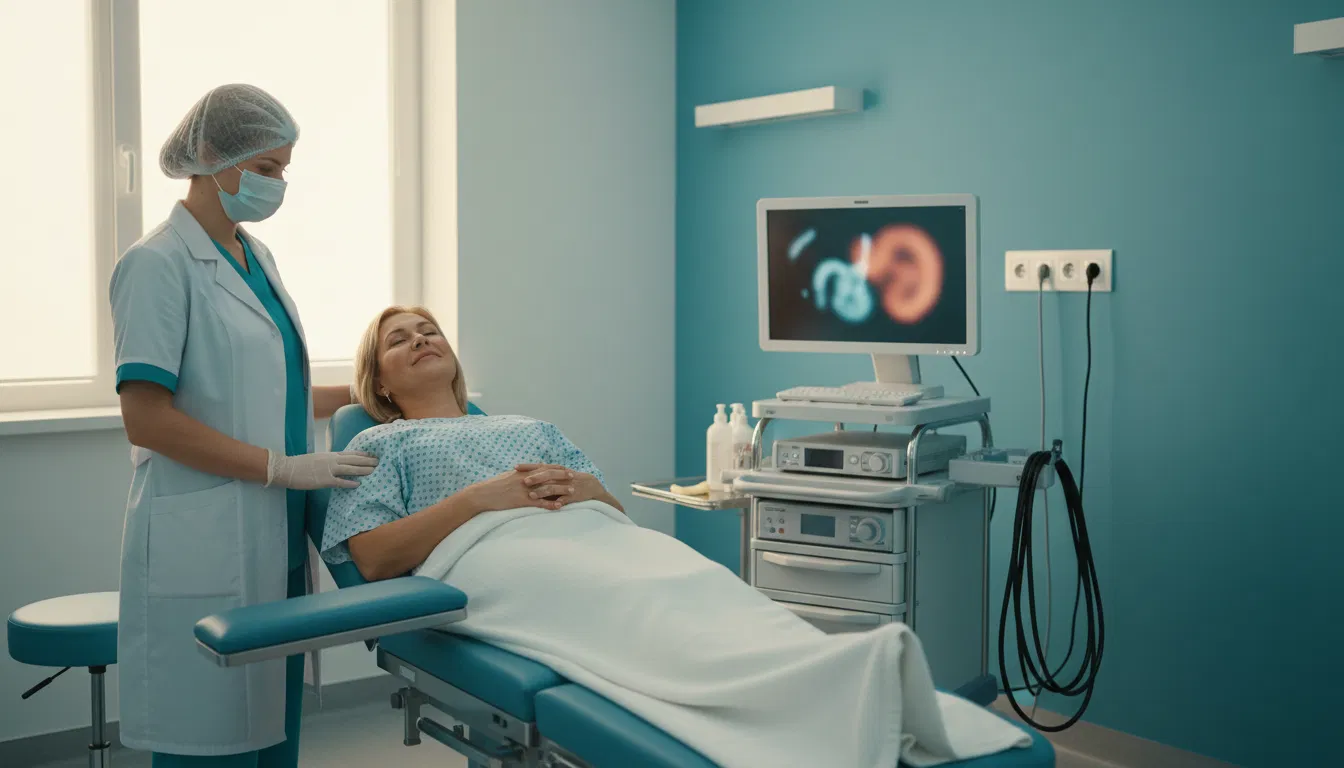
Following the standard appointment process, I arrived at the clinic on the scheduled day. A nurse guided me to the changing room, and I waited in a comfortable, private rest area. The warm, welcoming environment helped ease any nervousness.
The nurse then:
- Measured my vital signs (I noticed I'd lost a few pounds — upper abdominal pain plus weight loss isn't the best combination, which made me slightly anxious)
- Inserted an IV cannula for sedation medication delivery
Meeting the Medical Team
The gastroscopy physician and anesthesiologist came to perform the pre-procedure assessment and obtain consent. They noted that ideally, a family member should accompany patients for sedated procedures — a standard safety requirement.
The Sedation Experience
Once in the endoscopy suite, the nurse helped me position a mouth guard (used for both standard and sedated gastroscopy to allow scope passage).
Then the anesthesiologist administered the sedation medication:
| Timeline | Experience |
|---|---|
| 0 seconds | Mild tingling sensation in the arm vein |
| ~2 seconds | Feeling drowsy, then falling into deep sleep |
| ~15 minutes later | Hearing someone calling my name, saying the procedure was done |
| First few minutes after | Groggy, like waking from deep sleep; tried to sit up but felt lightheaded |
The entire procedure was completely painless. I had zero awareness during the examination.
Addressing the Two Biggest Fears
Fear #1: "Anesthesia Will Make Me Stupid"
Let's define what "stupid" means in terms of duration:
| Time After Procedure | How I Felt |
|---|---|
| 0-30 minutes | Slightly unsteady walking |
| 0-3 hours | Somewhat "out of it" — like staying up late watching a Champions League match |
| After 6 hours | Completely back to normal — felt fully energized |
The evidence is clear: Extensive research has confirmed that modern sedation drugs used for endoscopy have no impact on intelligence or cognitive function. The temporary grogginess is simply the drug wearing off, not brain damage.
Fear #2: "The Anesthesia Could Kill Me"
Before launching our sedated endoscopy service, our team reviewed the literature extensively:
| Risk | Rate |
|---|---|
| Death from sedated gastroscopy | 1 in 200,000 (0.0005%) |
| Annual traffic accident death rate in China | 5 in 200,000 (0.0025%) |
The risk of dying from sedated gastroscopy is 5 times lower than dying in a traffic accident. You face greater risk driving to the clinic than during the procedure itself.
My Results
I received good news — the gastroscopy found no significant abnormalities and none of the conditions I had worried about. From personal experience, sedated gastroscopy dramatically reduces the discomfort of the examination.
Key Takeaways
| Topic | Key Point |
|---|---|
| Pain level | Zero pain during sedated gastroscopy — you sleep through it entirely |
| Cognitive effects | No impact on intelligence; temporary grogginess resolves within 6 hours |
| Safety | Mortality risk is 1/200,000 — five times safer than driving |
| Recovery time | Walking steady within 30 min; fully normal within 6 hours |
| Who should consider it | Anyone needing gastroscopy who wants a comfortable experience |
| Requirement | A companion is recommended for the day of the procedure |
FAQ
Q: Is sedated gastroscopy suitable for everyone? A: Most healthy adults are good candidates. However, patients with severe cardiopulmonary disease, sleep apnea, or certain allergies may need additional evaluation. Your anesthesiologist will assess your suitability during the pre-procedure consultation.
Q: How long does the actual procedure take? A: The gastroscopy itself typically takes 5-15 minutes. Including sedation induction and initial recovery, plan for about 30-45 minutes in the procedure area, plus 1-2 hours of monitored recovery.
Q: Can I drive home after the procedure? A: No. You should not drive, operate machinery, or make important decisions for at least 24 hours after sedation. Arrange for someone to take you home.
Q: How often should I repeat gastroscopy? A: For routine screening in average-risk adults, every 3-5 years is typical. If you have specific conditions (Barrett's esophagus, family history of gastric cancer, or ongoing symptoms), your doctor may recommend more frequent surveillance.
Q: Is the sedation the same as general anesthesia for surgery? A: No. Sedated endoscopy uses "conscious sedation" or "monitored anesthesia care" — lighter than full general anesthesia. You breathe on your own throughout, and recovery is much faster.
References
- Early DS, et al. Guidelines for sedation and anesthesia in GI endoscopy. Gastrointestinal Endoscopy. 2018;87(2):327-337.
- Behrens A, et al. How safe is sedation in gastrointestinal endoscopy? A multicentre analysis of 388,404 endoscopies. Alimentary Pharmacology & Therapeutics. 2016;43(3):332-340.
- Vargo JJ, et al. Anesthesiologist-administered propofol for GI endoscopy: safe and effective. American Journal of Gastroenterology. 2019;114(7):1025-1027.